ⴰⵏⵙⵓⴼ ⵢⴰⵏⴽⵏ (Welcome) to this next article in the Language of the Week series. Today, we’ll be discussing Tamazight, ⵜⴰⵎⴰⵣⵉⵖ, a language family spoken throughout North Africa.
It is hard to discuss the Tamazight languages independently, so I’ve decided to cover them all together. However, it is important to note that the multiple Tamazight languages are not mutually intelligible and carry with them their own unique cultures and histories. This article, as always, serves as an overview, not a deep dive.
The basics

Tamazight (also referred to as Berber, although the use of this term is presently debated, so this article will stick to Tamazight) is a branch of the Afroasiatic language family primarily spoken in and around the northern coast of Africa, but also reaching into the Sahel in the southeast. Most modern speakers of the languages live in Morocco and Algeria, but substantial populations also exist in Libya, Niger, and Mali, and some scattered communities also exist in Tunisia, Mauritania, and Egypt.
Most speakers of these languages are members of the Amazigh ethnic groups, indigenous peoples to North Africa. Their languages and cultures have been oppressed over the centuries, leading to a slow but marked loss of prestige as French and Arabic took over many high-status social spheres. You can read more about language prestige in the article about Nuosu from last week.
Writing the fringes of civilisation
The Tamazight languages were not historically written down. Amazigh culture and tradition has a long history of being transmitted orally, leading to a slow fracturing of identity over centuries. Before the Arab conquests, there was not much of a notion of an “Amazigh identity”, but this began to change once categorised together by Arab and French administrators as “Berbers”.
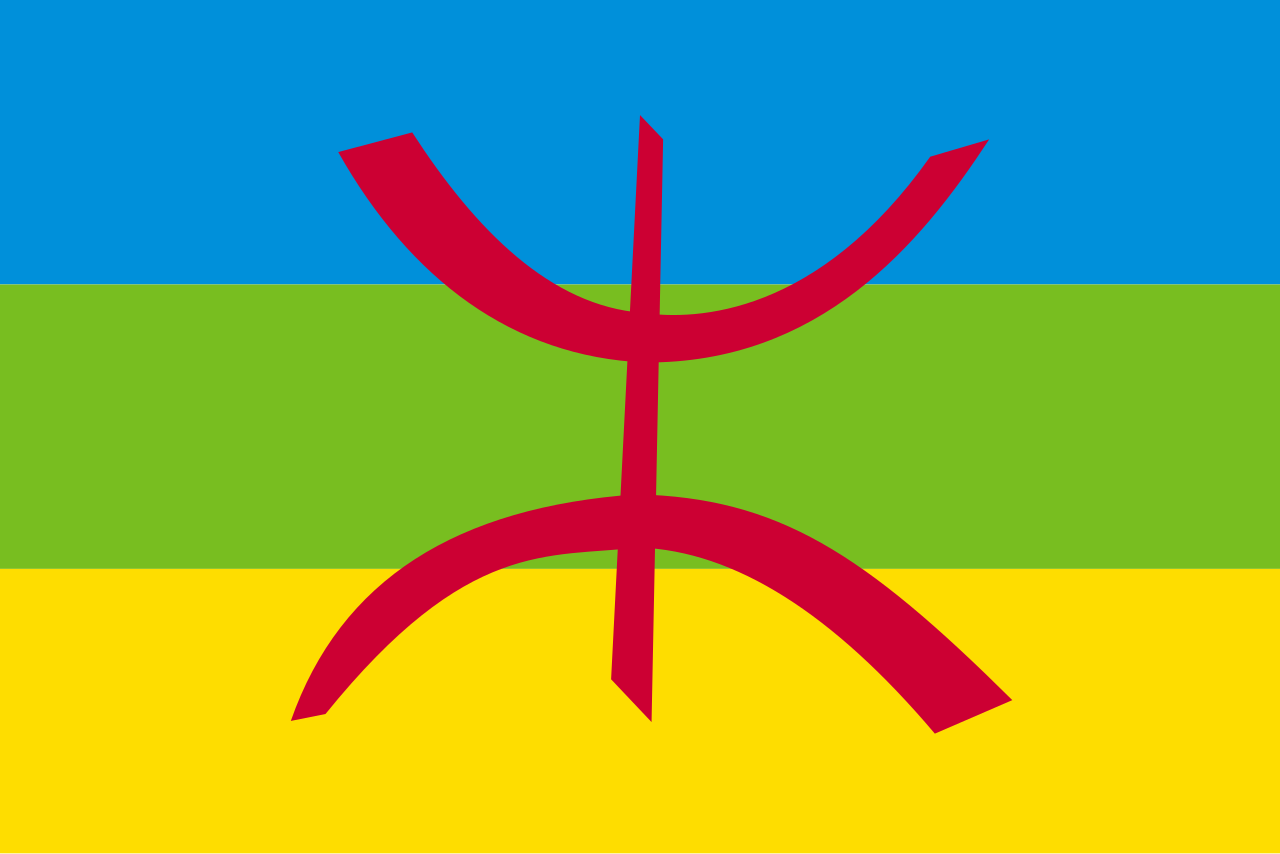
When Tamazight languages have been written down, they have taken a variety of forms. The oldest texts found relating to the family were written in Hieratic, a cursive form of ancient Egyptian hieroglyphics. Later, a script known as Libyco-Berber was used, which evolved into two of Tamazight’s four modern writing systems, both called Tifinagh. The text at the start of this article is in Neo-Tifinagh, an alphabet constructed in 1970 in Paris as a standard way to write Tamazight. It is the official script for the languages in Morocco, but its usage remains restricted in day-to-day life.
After the Arab conquests and the Islamisation of the Amazigh, some began to write in the Arabic script. Many attempts were made over the centuries to promote the use of Arabic for Tamazight, but the script failed to catch on more generally due to a lack of interest in writing by the Amazigh and then due to the increasing Franco-Italian presence in the region into the 19th and 20th century. European colonial powers introduced the first Latin writing systems to Tamazight, generally originally following French orthographic convention before later switching to a Semitic romanisation style. A modified Latin script is today the most common way to write the Tamazight languages, even in Morocco, despite the government preferring Neo-Tifinagh.
Domains in theory
In sociolinguistics, we often use the concept of “domains” to examine how language is being used. Where a language can maintain domains, it generally does better at self-preservation and expansion. What are domains, then?
A domain is essentially a fancy term for a specific social situation or context; governance, school, family, religion, and work tend to be the five main social spheres we talk about when we discuss a language’s domains, although they often overlap, and we also find far more domains and far more nuance than those five. Whenever a group of people regularly interact with each other in a certain context, we call that a domain.
Domains are important in the context of minority languages, because they establish a practical purpose to learning a language. It is well and good for people to want to learn a language for political or identity purposes, but it is difficult to build that out into a full revival movement if there is no practical purpose to learning it. Languages like Hebrew and Welsh are textbook examples of establishing domains to support language preservation; learning either language opens up social options for you in their respective countries.
Domains in practice
Tamazight has what I would call a “domain problem”. There is not a single domain in which Tamazight is the only expected option. The language has mostly been confined to individual homes or rural areas, leading to centuries of prestige loss and a lack of adoption by people of other ethnicities.
High-prestige areas have been dominated by Arabic (in local work, religion, and social life) or French (in international work, education, and governance), creating a polyglossic system which reinforced Tamazight’s role as the “low” form and actively prevented it from establishing itself in more socially prestigious areas.
Urbanisation following the Industrial Revolution has only accelerated this decline. Amazigh people moving to urban areas quickly found themselves minoritised, and stopped using their own languages to avoid stigma, to integrate into their new environment, or to set their children up for success and economic advancement in the Franco-Arabic environments of Morocco and Algeria, in a process called “intergenerational language loss”.
Revitalisation
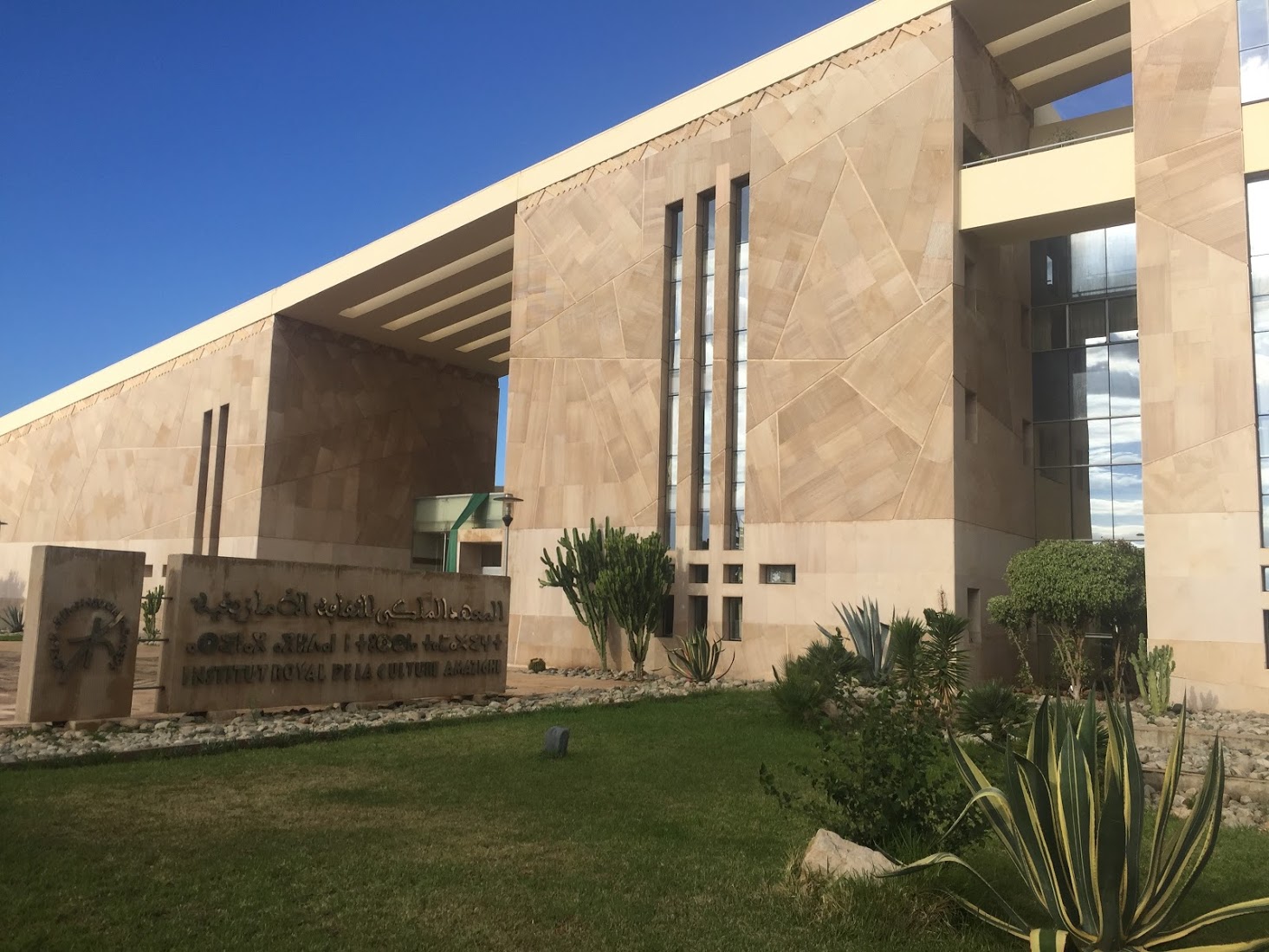
Revitalisation is always a hot issue for any minority language, and this is no less the case in Libya than in Llangollen. Most countries containing a large Amazigh population have a strong revitalisation movement for the languages, including government-backed institutions and moves towards official status. Both Morocco and Algeria now recognise Tamazight as an official language.
About the term “language” in this context
In North Africa, the term “language” is often used in a different way from in the West. Tamazight is often referred to as one collective language, in the same way that Arabic is often referred to as one language, despite containing many non-mutually intelligible varieties.
Most modern revitalisation efforts have focussed on the expansion of domains in which the languages are used, particularly in media and education. However, there is still much progress to be made. Tamazight education in Morocco only continues until the end of primary school, and the language is only taught as a subject; there is no Tamazight-medium education. This means that the education domain remains in Arabic and French, with Tamazight being treated more akin to English or Spanish than as a valid, native language in the country.
Getting an accurate picture of how many Tamazight speakers there are can be difficult due to a lack of census capacity in their home countries, historical social stigma leading to under-reporting of language use, and the geographically disparate area the languages are spoken in. Modern estimates of speaker count in Morocco, for example, tend to range between 9-14 million people, which is hardly the clearest picture on Earth. This makes it harder to organise revitalisation efforts, as much uncertainty exists over how many people even speak the languages to begin with.
Despite varying methodologies, however, most sources report an increasing number of Tamazight speakers in Morocco. This is not the case elsewhere in the Tamazight-speaking world. Populations in Tunisia and Egypt continue to collapse, now only in the tens of thousands, and Algeria’s population has just about held steady over the last 40 years, even as the population of the country has increased sharply due to increased living standards.
Conclusion
The survival of Tamazight in the generations to come relies on creating or retaking domains for the language family, giving people a practical reason to learn and use the language day-to-day and to pass it onto their children. Welsh has succeeded by making the language the easiest way to engage with public services. In the span of a decade, it has now become faster to speak to the government in Welsh than English—a similar project in Morocco, and especially Algeria, where speaker counts are stagnating, could be a simple way to make a viable path to further revitalisation effort. The use of new domains, such as the Internet, as a place to establish Tamazight may also prove useful.

Leave a Reply